Making the Invisible Visible: CONCENTRATE at the German Unity Day Celebrations in Bremen
How can we explore the invisible world of marine microorganisms? At the German Unity Day celebrations in Bremen on 3 and 4 October 2026, the Transregional Collaborative Research Centre CONCENTRATE invited visitors to discover the fascinating world of algae, bacteria and marine carbon cycling.
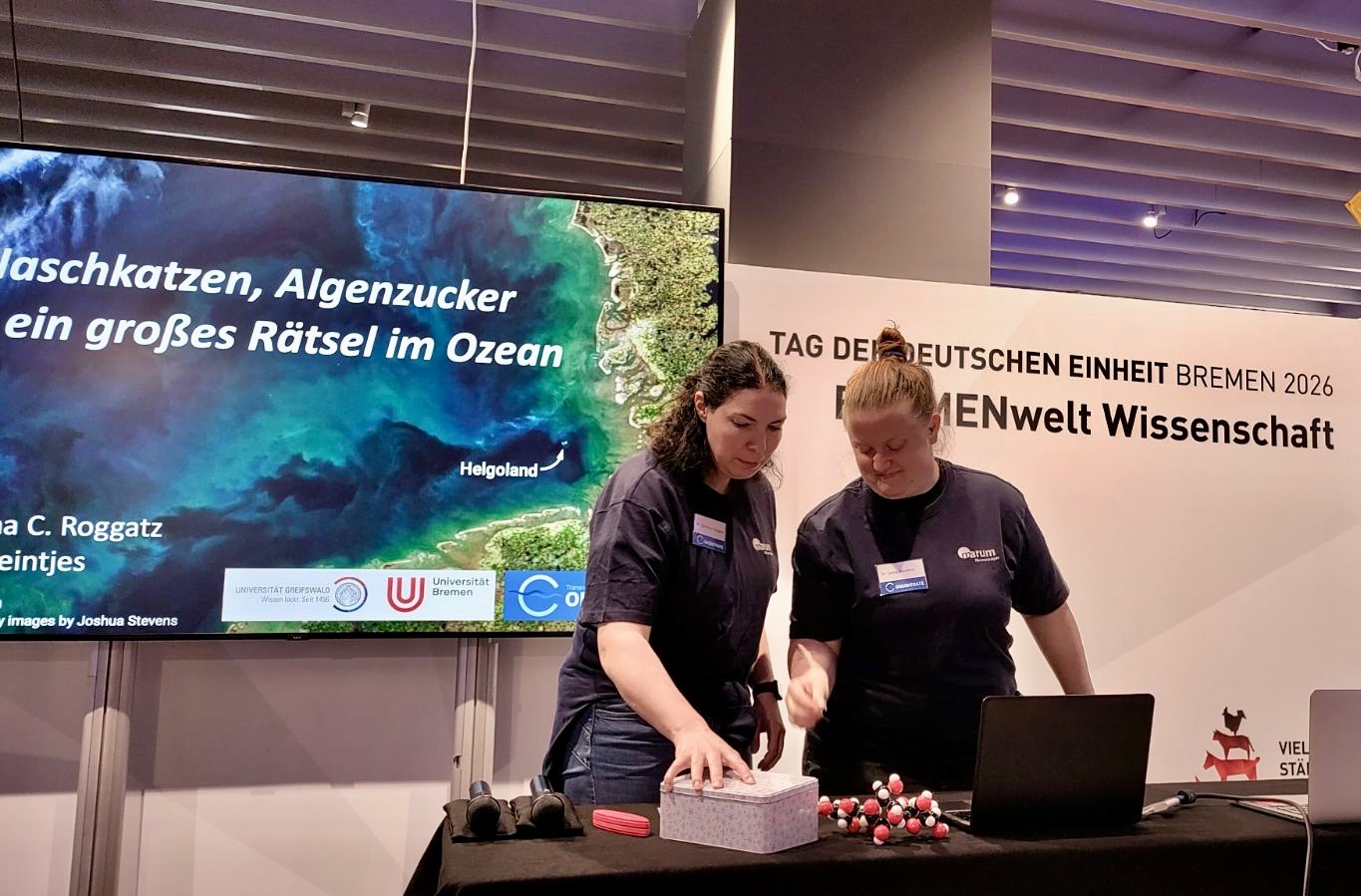
As part of the public festival, CONCENTRATE shared a stand with the Max Planck Institute for Marine Microbiology in the BREMENwelt Wissenschaft, a space dedicated to science and research. Around 500 people visited the stand over the course of the event.
Visitors of all ages could explore marine microorganisms through hands-on activities and interactive exhibits. They discovered microalgae under the microscope, explored bacterial structures, got hands-on with algal slime and learned how microorganisms contribute to the marine carbon cycle. A digital application developed by CONCENTRATE doctoral researcher Xinyu Tang offered another way to engage with the research.
The activities offered a glimpse into a world that usually remains hidden beneath the ocean's surface. They also helped illustrate one of the central questions of CONCENTRATE: why are some algal sugars not completely broken down by marine microorganisms, and how might this influence the long-term storage of carbon in the ocean?
Direct conversations with visitors were an important part of the event. Their questions, reactions and perspectives gave the researchers valuable insights into how people approach their work and how complex scientific topics can be communicated in accessible and engaging ways.
CONCENTRATE's research was also featured on stage at the science forum, where Dr Christina Roggatz and Dr Greta Reintjes introduced the Transregional Collaborative Research Centre using a playful analogy involving Christmas biscuits.
The event was a valuable opportunity to bring marine microbial research to a broad public audience, spark curiosity about the microscopic life of our oceans and exchange ideas beyond the scientific community.
A big thank you to everyone who contributed to the stand and to the organisers of the German Unity Day celebrations in Bremen for making this event possible!