B2 TRAP
Bacteria require adapted proteins to bind the right glycans
Dr. Marie-Katherin Zühlke
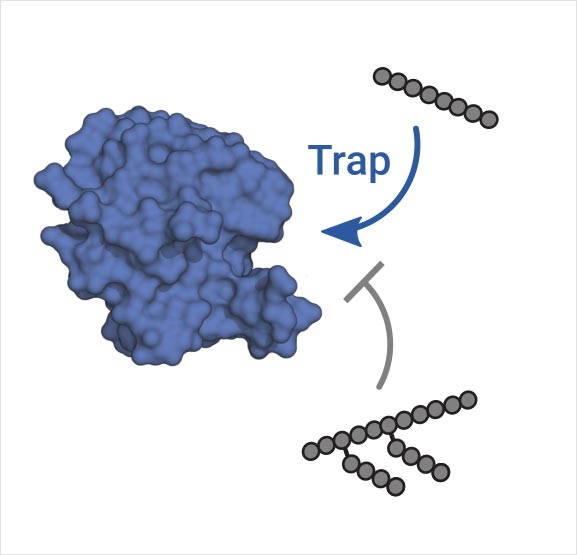
By investigating glycan-binding proteins on the surface of bacteria, this project investigates why some glycans can escape this trap and contribute to carbon sequestration. Its hypothesis is that non-catalytic glycan-binding proteins, which are the first step in glycan utilization, represent a bottleneck in substrate acquisition and therefore limit degradation. B2 TRAP aims to provide detailed insight into ligand binding and its limitations. The identification of non-binding orphans in different groups of glycans, but also of abiotic conditions that affect binding, will contribute to a better understanding of carbon fluxes in the oceans.
Subproject Team


Publications
The ISME Journal, 20.1
March 2026
Fructan utilization by members of marine Gammaproteobacteria involves SusC/D-like proteins
Marie-Katherin Zühlke, Alexandra Bahr, Daniel Bartosik, Vipul Solanki, Michelle Teune, Norma Welsch, Frank Unfried, Tristan Barbeyron, Elizabeth Ficko-Blean, Paula Schoppmeier, Laurie Schiller, Nahja Busse, Disha Banerjee, Lionel Cladière, Alexandra Jeudy, Anne Susemihl, Fabian Hartmann, Diane Jouanneau, Murielle Jam, Matthias Höhne, Mihaela Delcea, Greta Reintjes, Uwe T Bornscheuer, Dörte Becher, Jan-Hendrik Hehemann, Mirjam Czjzek, Thomas Schweder
A1 | A3
B1 | B2 | B3
C2 | C3