A7 PREY
Synergism, antagonism & mortality in a seasonal context
Prof. Dr. Rudolf Amann, Dr. Hanno Teeling
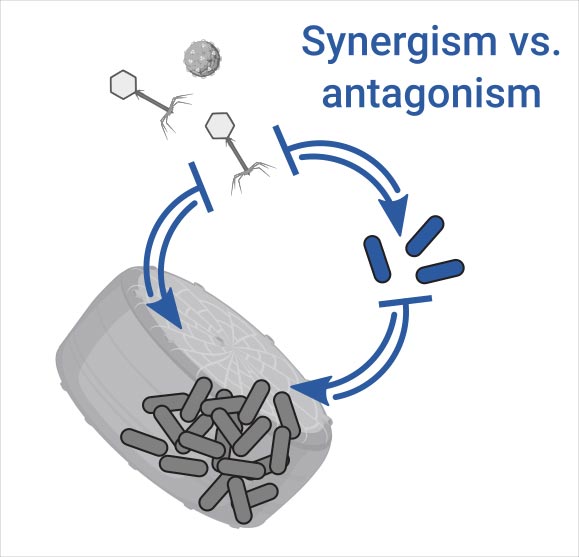
Understanding how bacterial cell growth and death influence glycan stability is crucial for identifying the mechanisms that enable glycans to resist degradation and contribute to long-term carbon storage. A7 PREY studies the influence of positive and negative interactions between bacteria, viruses and algae, to investigate selected, environmentally relevant model bacteria for synergistic and antagonistic interactions with other bacteria and algae, as well as to study the influence of phages (lysis) and plasmids (chemical warfare) as mortality factors on bacterial polysaccharide turnover that may promote carbon sequestration.
Subproject Team

Publications
Nature Ecology & Evolution, 10.5
March 2026
Taxonomic composition and ecophysiology of resident bacteria associated with marine phytoplankton
Xiaoyu Yang, Guanjing Cai, Runlin Cai, Haifeng Gu, Yuerong Chen, Jianmin Xie, Zhong Hu, Jonathan Y. S. Leung, Hanno Teeling & Hui Wang
A7